New Zealand’s First Enterprise-Level Earthquake Early Warning Sensor Project
By: GSD

We are thrilled to announce that Global Seismic Data (GSD) has secured Callaghan Innovation funding to deliver New Zealand's first enterprise-level Earthquake Early Warning (EEW) project.
This project is not just about installing sensors—it is the result of years of grounded research. Dr Chanthujan Chandrakumar, who completed his PhD on low-cost EEW systems in New Zealand, demonstrated through real-world pilot deployments that EEW is both feasible and impactful for our unique seismic setting (https://chanthujanchandrakumar.com/).
With multiple peer-reviewed publications in this field, Dr Chandrakumar has now joined forces with GSD to lead the next chapter: building a scalable EEW service for Aotearoa.
Designed for Communities and Critical Infrastructure
This homegrown innovation is being developed by New Zealand scientists and engineers with the clear mission of strengthening national resilience. The EEW system will feature:
- Seamless integration with critical infrastructure – enabling transport networks, utilities, and emergency services to trigger automated safety protocols.
- A public-facing information portal – providing near real-time access to seismic data and alerts, empowering communities with situational awareness.
- A sustainable, locally supported innovation model – ensuring that New Zealand has a resilient EEW system built for its own tectonic challenges.
Together, we can transform how New Zealand prepares for earthquakes—one sensor at a time.
What is Earthquake Early Warning?
An EEW system detects the very first signals of an earthquake—called P-waves—which travel faster but cause little shaking. By analysing these signals, the system can predict the arrival of the stronger S-waves (the ones that cause damaging shaking).
This means you can get a few seconds to tens of seconds of warning, depending on how far you are from the epicentre. Even a short warning can make a big difference: slowing down trains, shutting down machinery, or simply giving you time to protect yourself and those around you.
How Does It Work For You?
1. Sensor Installation at Your Location
- A small, low-cost EEW sensor is installed in your home, office, or building.
- The sensor continuously monitors ground motion in real-time.
2. Warning Before Strong Shaking Arrives
- Based on your location, the system calculates how intense the shaking will be and when it will arrive.
- You receive an alert on your phone, dashboard, or alarm device seconds before the damaging waves reach you.
3. Post-Earthquake Shake Report
- After each event, you will receive a detailed Shake Report:
- The level of shaking recorded at your exact location.
- A comparison with shaking intensities across your suburb and region.
4. For building owners, we also offer an optional Structural Health Monitoring (SHM) service to assess how your structure performed.
Dashboard
The online dashboard features an interactive map view, a quake summary panel, and a shake report section where users can download detailed event reports. A mobile version of the dashboard, offering similar functionality and user interface, is under development and will be available upon completion.
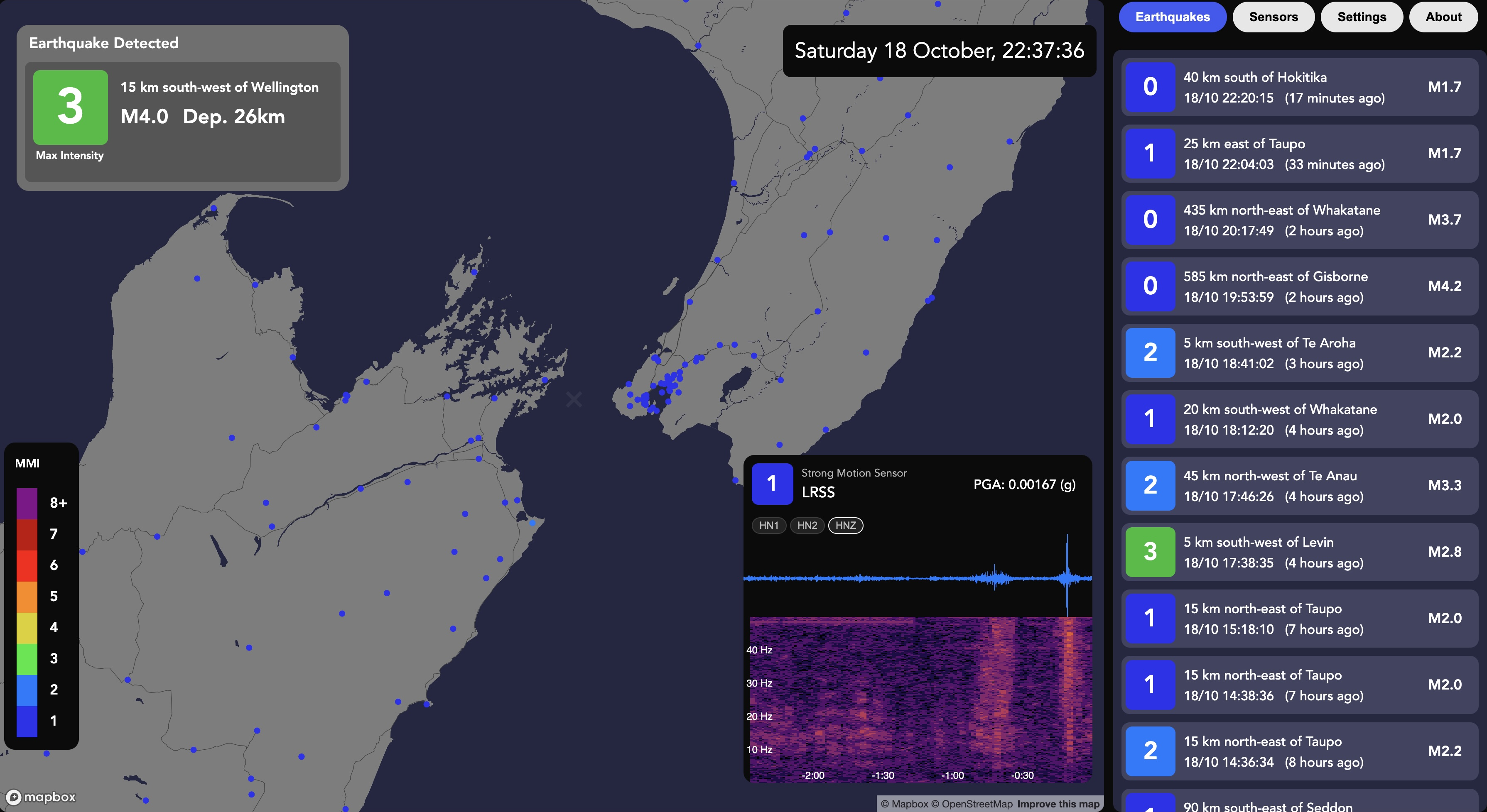
Concept earthquake early warning dashboard
Mobile App
We are currently developing mobile applications for both Apple (iOS) and Android platforms, which will provide functionality similar to the online dashboard, including real-time earthquake maps, quake summaries, and downloadable shake reports.
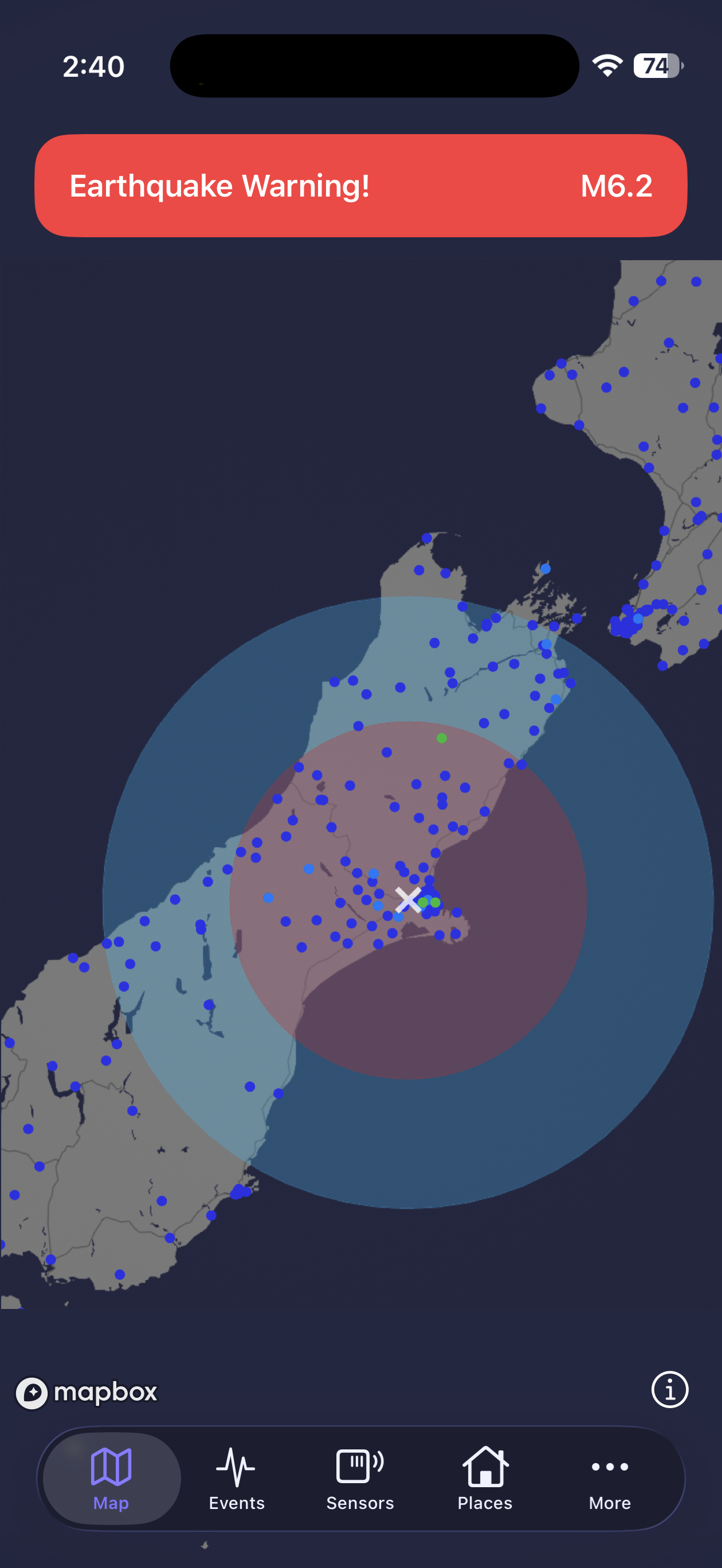
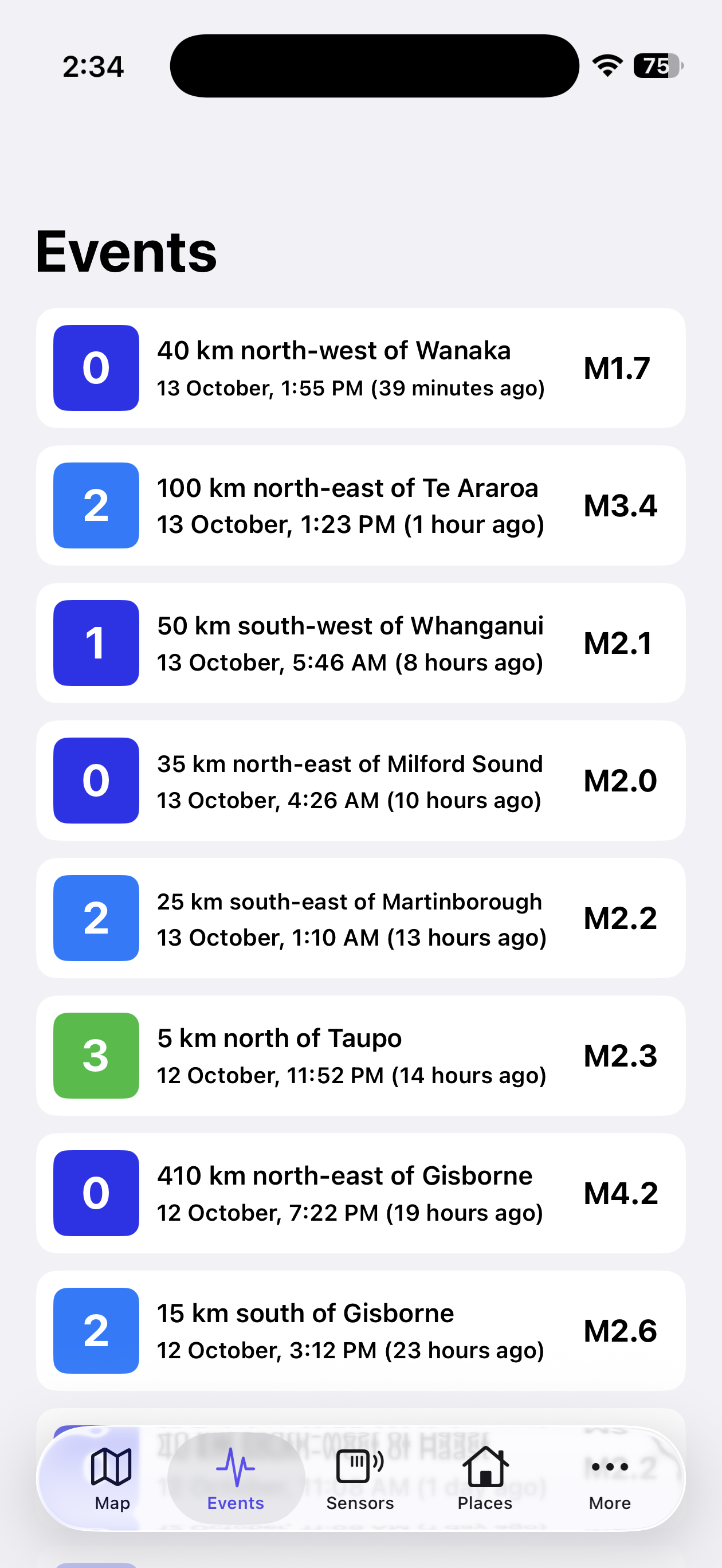
Concept earthquake early warning mobile app
Shake Report
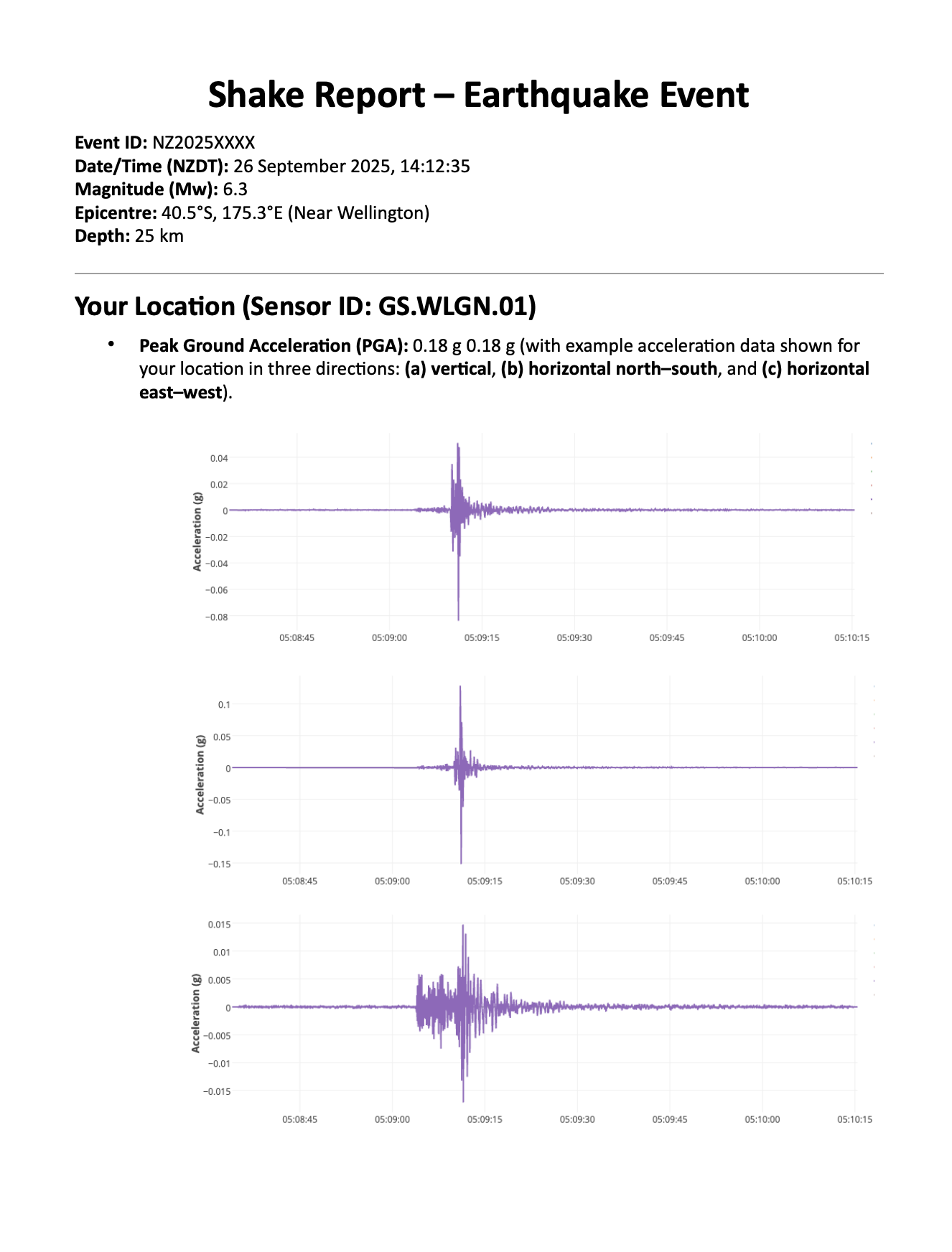
Shake report available shortly after alert sent out